Soft Spots in the Floor: When the Sub-Floor Has to Go Before the New Flooring
New flooring over a bad sub-floor looks fine for a few months and then tells on itself.
October 20, 2026 · 3 min read
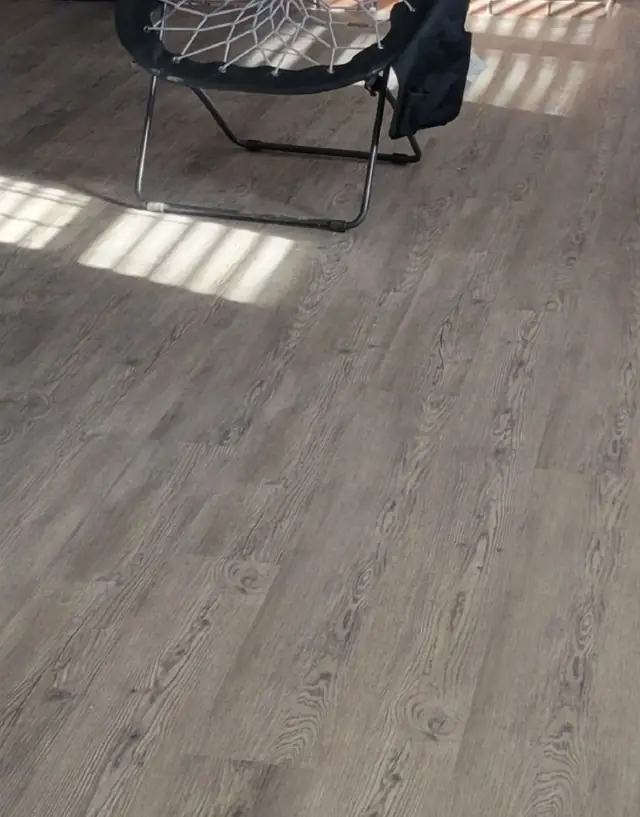
You picked the new flooring. You have a sample on the counter and a date in mind. Then, walking through the room one more time, you notice a section near the bathroom that gives a little underfoot. It is easy to tell yourself the new floor will firm it up. It will not. Flooring is a surface, and a surface cannot do the job of what lies beneath it. If the sub-floor is wet, soft or crumbling, the best thing you can do for the new floor is deal with that first.
What the floor is telling you
A failing sub-floor usually announces itself before anything is visibly wrong. You just have to be walking the room with that question in mind. These are the signs worth taking seriously.
- A spot that bounces or dips under your foot, especially a patch that feels different from the boards around it
- A ridge or soft bulge in vinyl or laminate over a specific area
- Staining or darkening around the edge of the room, or baseboards that have swollen or pulled away
- A musty smell that comes back after cleaning
- A floor that slopes toward one corner or feels slightly lower near a wall
- A toilet that rocks, or a tub that seems to sit on a different level than before
One sign on its own can have a simple explanation. Two or three in the same spot almost never do.
Where sub-floors give up first
Water is behind most sub-floor failures, and water shows up in predictable places. Around a toilet, where a bad wax seal or a sweating tank lets moisture creep in for years. At the edge of a tub or shower, where caulk has failed. Under a kitchen sink, behind a dishwasher or beneath a refrigerator with an ice-maker line. Inside an exterior door, where rain and snow blow in. Wood in a spot like that does not dry out by itself. It stays damp, loses strength and sometimes starts to rot, and the damage is usually larger than the stain suggests.
Check it from below when you can
If there is a basement or a crawl space, go down and look at the underside of the suspect area with a flashlight. Look for dark staining, rust on nails, sagging or fuzzy growth. Then press a screwdriver tip into the wood. Healthy wood resists. Wood that gives easily, flakes or comes away in soft chunks has lost its strength. Check the joists beside the area as well, not just the floor boards. If the joists are damp or soft, the repair gets bigger. If you have no access from below, tapping the floor above with a hammer handle can help. A solid sound means solid wood, and a dull or hollow thud is worth a closer look.
A squeak is not always a soft spot
Squeaks are common and often harmless. They usually come from boards or fasteners rubbing, not from decay. The difference is that a squeak does not feel soft. If a spot squeaks and also moves, or squeaks and smells damp, treat it as suspect. If it squeaks and feels firm, a few well-placed screws into the joists will often quiet it without touching the surface.
Why you should not cover it up
New flooring over a weak sub-floor fails in a few predictable ways. Floating floors flex and the joints open up. Tile cracks along the grout lines. Vinyl telegraphs every dip. Fasteners pull loose from wood that has lost its grip. And if moisture is still reaching the sub-floor, the new surface seals it in with the damage. You end up paying for a floor twice.
Find the water, then fix the wood
A replacement sub-floor will rot just like the old one if the leak is still active. So the first job is finding and stopping the source: a failed seal, a dripping supply line, a gap in a shower surround. After that, the damaged section is cut back to solid framing, the joists are checked and reinforced if they need it, and new sheathing is fastened down and brought level with the surrounding floor. Done properly, a patch can be strong, flat and invisible once the flooring goes on top.
HandyMac does flooring and sub-floor replacement in Telford and throughout Montgomery and Bucks County. If a spot in your floor feels wrong, call or text Joel MacLeod at 908-296-9261 and send a photo. He has more than 25 years in home construction, works under PA license PA180140 and is fully insured.
HandyMac Home Services LLC, 908-296-9261
Call 908-296-9261More articles
How to Build a Repair List One Handyman Visit Can Clear
Twenty minutes with a pen turns a head full of nagging repairs into a single, finished visit.
Grab Bars and Wider Doorways: Making a Home Easier to Move Through
A few well-placed bars and one wider opening can change how a house feels to someone who is unsteady on their feet.