Grab Bars and Wider Doorways: Making a Home Easier to Move Through
A few well-placed bars and one wider opening can change how a house feels to someone who is unsteady on their feet.
October 20, 2026 · 4 min read
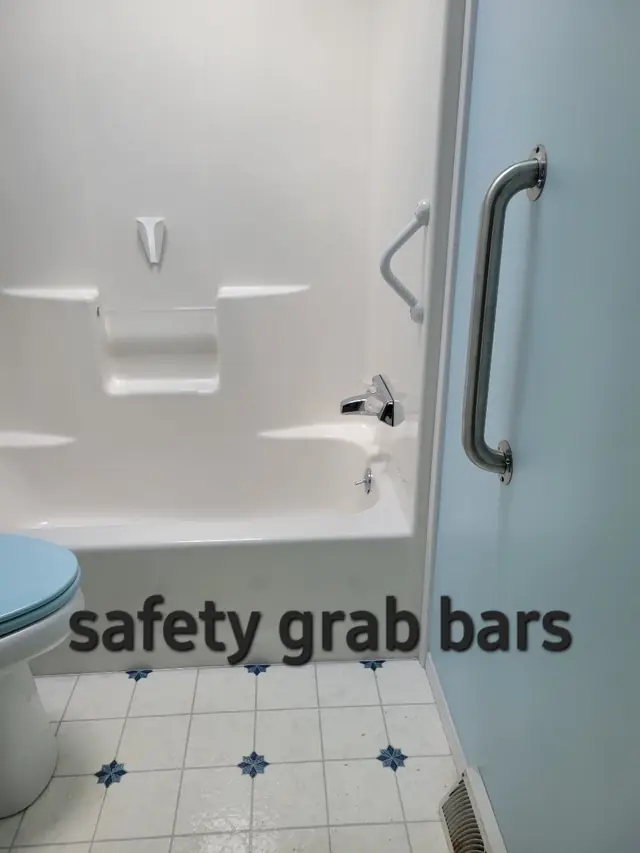
Houses are built for people at their strongest. The tub edge is high, the bathroom door is narrow, and the only thing to grab in the shower is a soap dish. For a parent who has become unsteady, or for anyone recovering from surgery, those details turn from background into daily obstacles. The good news is that most of the fixes are small, and they are far easier to do before a fall than after one. Here is how to think about grab bars and doorways in a way that keeps the work sensible.
Start by watching where the hands go
Before buying anything, spend a day paying attention to how the person actually moves through the house. Where do they reach for the wall? Which surface do they lean on to stand up? Where do they pause? Hands go to the same places over and over, and those are the places that need something solid. People often guess at the bathroom first, which is reasonable, but the answer is sometimes a stair landing, a back step or the hallway to the bedroom.
Where grab bars earn their place
The bathroom is where most bars go, because it combines wet surfaces, hard floors and awkward body positions. These are the spots that come up most often.
- At the shower or tub entry, where someone steps over an edge and balances on one foot
- Inside the shower, on the long wall, where a person turns or reaches for the controls
- Beside the toilet, for the moment of standing up
- At the top and bottom of a stair, where a handrail runs out before the last step
- Near an exterior door, where a threshold and a change of surface meet
Vertical bars suit entries, because a hand can slide up them as a person steps. Horizontal bars suit the long wall of a shower. Angled bars help someone push up from a seat. The right mix depends on the person, which is why the observation day matters.
Why a grab bar has to go into framing
A grab bar is a safety device, not a towel rack. When someone falls, they do not lower their weight gently onto it. They throw all of it at once. A bar fastened only into drywall, even with a clever anchor, can tear out of the wall at the exact moment it is needed. A proper installation fastens into the studs or into solid blocking behind the wall. That means finding the framing first, with a stud finder and then a test, and planning the bar position around what is actually inside the wall rather than where it looks best.
Tile makes this harder. The bar has to be drilled through tile without cracking it, then screwed into the wood behind, then sealed so water cannot follow the screws into the wall. If the studs are not where you need the bar, the honest answer is sometimes to open the wall and add blocking. That is more work than a quick screw job, and it is the reason a good installation costs a little more time than people expect.
A suction-cup bar depends on a seal, not on the structure of the house. Treat one as a temporary aid at most, and do not lean your full weight on it.
When widening a doorway makes sense
Some doors simply do not let a walker or a wheelchair through. Others pass the chair but scrape knuckles and wall corners. If a person has to turn sideways, or if a helper cannot stand beside them in the opening, the door is in the way of daily life. That is the case for widening. Before anyone picks up a saw, someone has to find out what is in the wall: wiring, a switch, a heating run or a plumbing line. They also have to know whether the wall holds up part of the house. A wall that carries load needs a proper header over the new opening, and your township may want to know about it, so check with them before you start.
Simpler ideas to try first
Sometimes a doorway does not need to grow. Offset hinges swing the door clear of the opening and can gain a little useful width with no framing change at all. Taking the door off entirely, or replacing it with a curtain, works in some bedrooms and closets. Rehanging a door so it swings out of the room instead of into it can free space where a wheelchair needs to turn. A pocket door slides into the wall and removes the swing problem completely. Those options are worth weighing before anyone opens up the wall.
HandyMac has installed safety grab bars and widened doorways for homeowners in Telford and across Montgomery and Bucks County. Joel MacLeod is a licensed PA contractor, license PA180140, and fully insured, and he will tell you honestly if a job calls for blocking behind the wall or a closer look at what is inside it. Call or text 908-296-9261 to talk through your house.
HandyMac Home Services LLC, 908-296-9261
Call 908-296-9261More articles
How to Build a Repair List One Handyman Visit Can Clear
Twenty minutes with a pen turns a head full of nagging repairs into a single, finished visit.
Soft Spots in the Floor: When the Sub-Floor Has to Go Before the New Flooring
New flooring over a bad sub-floor looks fine for a few months and then tells on itself.