Checking Porch Posts, Railings and Deck Boards for Rot After a Pennsylvania Winter
Late winter is the best time to find out what the cold did to your porch, before the first party of the year.
October 20, 2026 · 4 min read
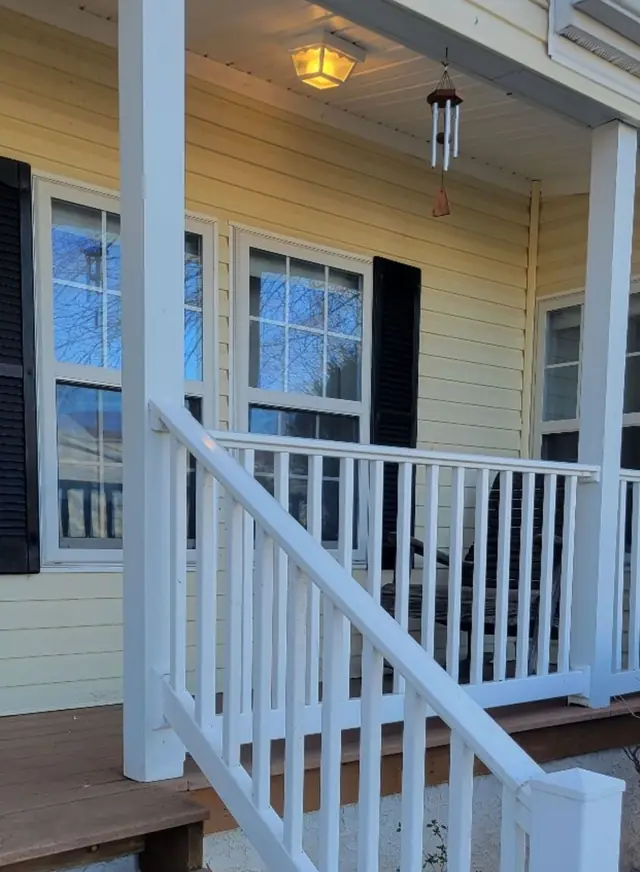
A porch seems solid until you lean on a railing that moves, or step on a board that gives a little more than it did last year. Pennsylvania winters are not kind to exterior wood. Snow sits on it, melts, runs into every seam and freezes again, and this cycle repeats dozens of times before the spring thaw. By March, the damage is already done. What you want to know is how much, and whether it is the kind that can wait. A slow walk around the porch with a screwdriver will tell you most of it.
What a Pennsylvania winter does to wood
Water is the enemy, and it gets in through the weak spots: end grain, screw holes, cracked paint, joints where two boards meet. Once it is inside, it freezes and expands, widening every crack. When it thaws, more water follows the gap. Wet leaves packed in corners, snow piled against posts and salt tracked across the boards all keep the wood damp. Damp wood rots. The part you see is only the surface. The worst decay is often hidden at the base of a post, under a rail cap or inside a joint.
Start at the bottom of the posts
Posts rot from the bottom up, because that is where water collects and where end grain meets concrete, soil or a metal bracket. Kneel down and look at the base of each one. Paint that has bubbled or peeled, dark staining, a soft or fuzzy texture and a post that has shrunk away from its base are all warning signs. Push a screwdriver tip into the wood about an inch above the bottom. If it sinks in with little effort, the post is rotted. Then grab the post at chest height and try to rock it. A sound post does not move.
Test the railings by leaning on them
A railing has one job, and that is to stay put when someone leans on it, or a child or a dog runs into it. Do not just look at it. Lean on it, firmly, at several points along the run and at each corner. Wobble in a rail usually means loose fasteners or rot where the rail meets a post. Check the balusters too, the vertical pieces between rails, and look for cracks or ones that spin in their holes. If a section moves, do not wait for the next heavy use of the porch. Railing height and spacing rules vary, so if you are rebuilding one, check with your township about what applies.
Deck boards and the places that hide damage
Walk the surface slowly and feel for soft spots, which often show up near the house wall, around posts and at board ends. Look at the gaps between boards, because debris packed into them holds moisture against the wood. If the deck or porch is attached to the house, take a look at where it connects, and run a screwdriver gently along the rim board there. That attachment holds a great deal of weight. If you find soft wood, rust or a gap opening between the porch and the house, that is a job to call about promptly.
A quick checklist
- Bases of all posts: probe with a screwdriver, then try to rock them
- Every railing run: lean on it at the ends and middle
- Balusters: look for cracks, loose fit and any that spin
- Deck boards: step across every board, especially near the house and at the ends
- Stairs: check each tread and look at the stringers where they meet the ground
- Where the porch meets the house: look for gaps, rust and soft wood
Repair or replace?
Surface rot confined to a single board, a rail cap or a short length of trim is usually a straightforward replacement. Rot in the base of a post, in the joist beneath it or at the house connection is structural, and the post or framing has to be supported while the damaged piece is swapped. That is not a shortcut job. Not every soft spot means a rebuild, but the ones at the supports are never worth ignoring. And if you do replace, it is the right moment to seal end grain and fix whatever let the water in, so it does not happen again.
HandyMac repairs and replaces porches, decks and railings in Telford and across Montgomery and Bucks County. Joel MacLeod is fully insured and works under PA contractor license PA180140. If your checklist turns up something that worries you, call or text 908-296-9261 and send a photo of the post or board in question.
HandyMac Home Services LLC, 908-296-9261
Call 908-296-9261More articles
How to Build a Repair List One Handyman Visit Can Clear
Twenty minutes with a pen turns a head full of nagging repairs into a single, finished visit.
Grab Bars and Wider Doorways: Making a Home Easier to Move Through
A few well-placed bars and one wider opening can change how a house feels to someone who is unsteady on their feet.